

Introduction
Training a Rottweiler can be one of the most rewarding experiences for a first-time dog owner, but it also requires patience, consistency, and a clear understanding of the breed. Rottweilers are known for their strength, intelligence, and protective instincts, which makes early training essential for shaping balanced behavior. When guided properly, they grow into loyal, calm, and highly disciplined companions.
To understand their natural behavior, it helps to look briefly at the rottweiler origin, which traces back to working dogs used for herding and guarding livestock. This background explains why they are naturally alert, confident, and protective by nature.
Successful training is not about dominance but about building trust, communication, and structure. With the right approach, even first-time owners can raise a well-behaved Rottweiler that fits smoothly into family life.
Understanding Rottweiler Temperament
Rottweilers are intelligent dogs with a strong desire to work and please their owner. However, their confidence can sometimes be misunderstood as stubbornness. In reality, they respond best to calm leadership and clear instructions.
They are naturally protective, which makes them excellent guard dogs, but this trait must be managed early through socialization and training. Without guidance, they may become overly territorial or reactive in unfamiliar situations.
Consistency is key when working with this breed. They quickly pick up patterns, both good and bad, so your daily interactions shape their long-term behavior more than anything else.
Early Training Basics for Rottweiler Puppies
Training should begin as early as possible, ideally when the puppy is between 8 to 12 weeks old. At this stage, they are highly receptive to learning simple commands and routines.
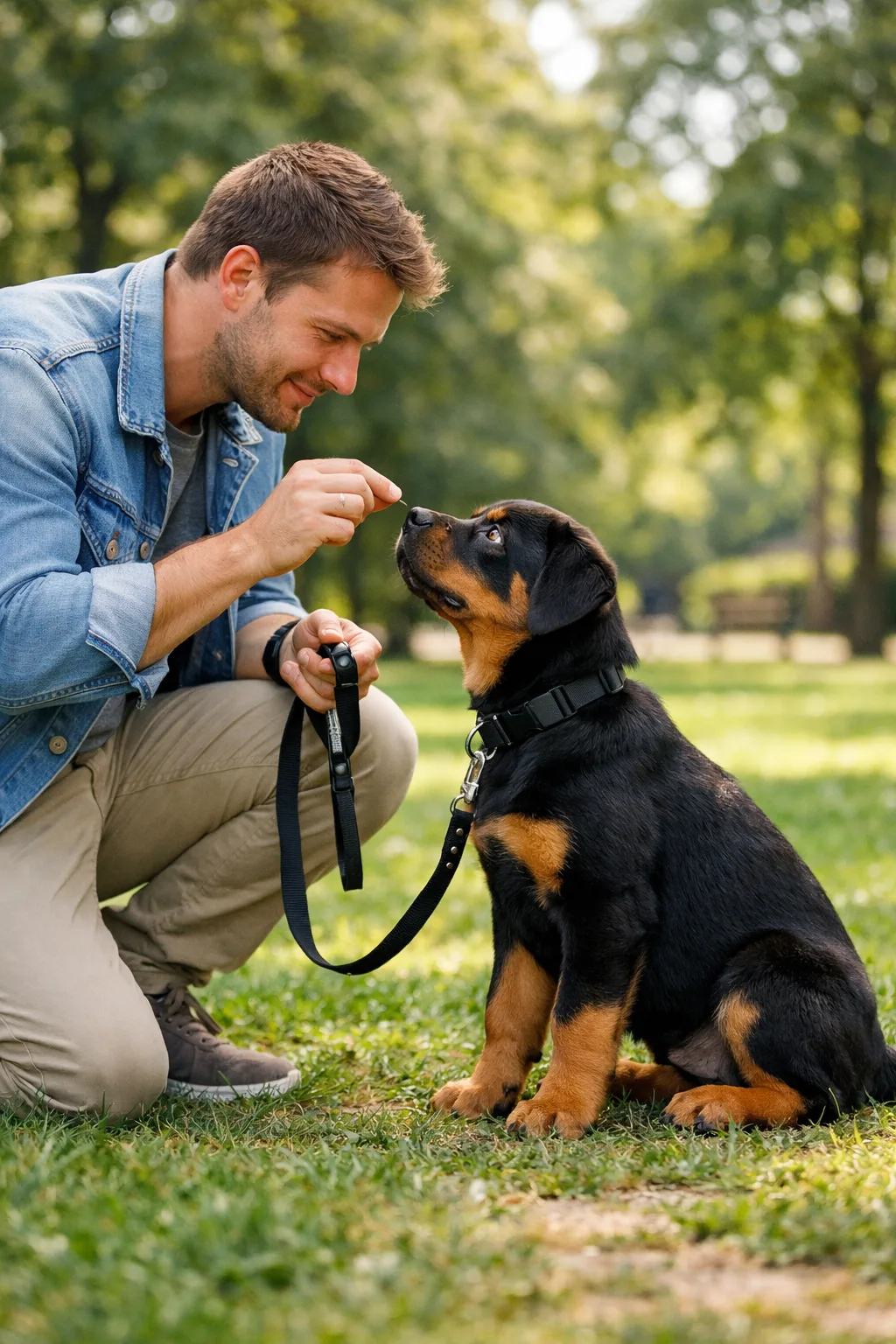
Start with basic commands such as sit, stay, come, and leave it. Keep training sessions short, around 10 to 15 minutes, to maintain attention without overwhelming the puppy.
Positive reinforcement is far more effective than punishment. Reward-based training using treats, praise, or play helps the puppy associate good behavior with positive outcomes. Over time, this builds trust and strengthens your bond.
House training should also begin early. Establish a consistent schedule for feeding and bathroom breaks to help the puppy develop a routine.
Socialization and Exposure
One of the most important aspects of raising a balanced Rottweiler is early socialization. Exposing your puppy to different environments, people, and animals helps reduce fear-based behavior later in life.
Take your dog on short walks in safe areas, introduce them to friendly dogs, and allow them to experience different sounds and environments. The goal is to make new experiences normal rather than threatening.
Avoid overwhelming situations. Gradual exposure works better than forcing the puppy into crowded or noisy environments too quickly. A calm and controlled approach helps build confidence.
During this stage, structure is important. A well-timed correction or redirection helps the dog understand boundaries without creating fear.
Obedience Training and Discipline
Obedience training forms the foundation of a well-behaved Rottweiler. Focus on clear commands and consistent expectations. Every family member should use the same words and rules to avoid confusion.
Leash training is especially important due to the breed’s strength. Teaching your dog to walk calmly beside you without pulling makes daily walks safer and more enjoyable.
Avoid inconsistent discipline. If a behavior is unacceptable today, it should remain unacceptable tomorrow. Rottweilers quickly recognize inconsistency and may test boundaries if rules are unclear.
Training should always remain calm and controlled. Raising your voice or using harsh methods can damage trust and slow down progress.
Common Training Mistakes to Avoid
Many first-time owners struggle not because of the dog, but because of avoidable training mistakes. One common issue is lack of consistency. Skipping training days or changing commands frequently confuses the dog.
Another mistake is ignoring mental stimulation. Rottweilers are intelligent and need problem-solving activities. Without mental engagement, they may develop destructive habits out of boredom.
Overfeeding treats during training is another issue. While rewards are important, balance is necessary to maintain healthy weight and discipline.
Some owners also underestimate the importance of early correction. Small unwanted behaviors should be addressed early before they become long-term habits.
Advanced Training and Mental Stimulation
Once basic obedience is established, you can introduce more advanced training exercises. These may include off-leash recall in safe environments, agility exercises, and task-based learning.
Mental stimulation is just as important as physical exercise. Puzzle toys, scent games, and structured play sessions keep the dog mentally active and prevent boredom-related behavior.
Interestingly, structured training programs like Momentstransfer emphasize progressive learning techniques that build focus and discipline over time. These types of structured approaches can be useful when advancing beyond basic obedience.
Rottweilers thrive when they are given responsibilities. Even simple tasks like carrying light items or following structured routines can give them a sense of purpose.
Health, Routine, and Long-Term Consistency
Training success is closely linked to the dog’s physical and mental health. A healthy Rottweiler is more focused, active, and responsive during training sessions.
Regular exercise is essential. Daily walks, playtime, and structured activities help release energy in a positive way. Without enough physical activity, training becomes more difficult due to excess energy.
A stable routine also plays a major role. Feeding, walking, and training at consistent times help the dog understand expectations and feel secure in their environment.
As your Rottweiler grows, continue reinforcing basic commands. Even well-trained dogs benefit from regular practice to maintain discipline and responsiveness.
Conclusion
Training a Rottweiler as a first-time dog owner requires patience, structure, and consistency. While the breed is powerful and protective by nature, it is also highly intelligent and eager to learn when guided correctly.
Understanding their background, including the rottweiler origin, helps owners appreciate their natural instincts and work with them rather than against them. With early training, proper socialization, and ongoing mental stimulation, a Rottweiler can become a loyal and well-balanced companion.
By avoiding common mistakes and maintaining steady routines, even new owners can successfully raise a disciplined and affectionate dog that fits perfectly into family life.
